Arquitetura | Urbanismo
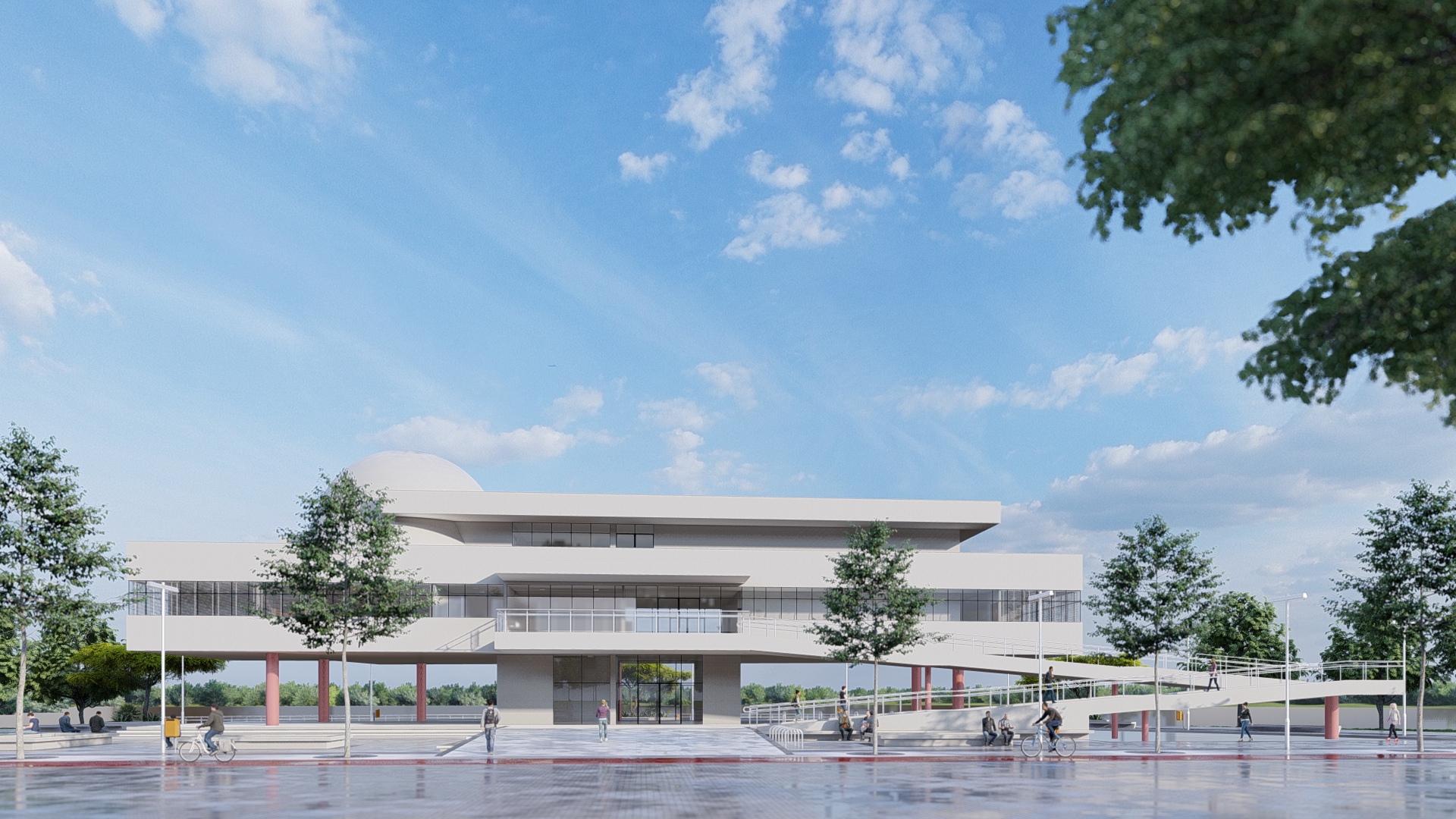
Planetário Praça da ciência – Colatina
Área Total : 6.712,83m²
Ano : 2023
Localização : Centro de Ciência – Esplanada, Colatina, Espirito Santo – Brasil
Arquitetos Responsáveis : MCS Arquitetura & Urbanismo
Planetarium Scienci square – Colatina
Total Area : 6.712.83m²
Year : 2023
Address : Scienci Center – Esplanada, Colatina, Espirito Santo – Brazil
Architects : MCS Architeture & Urban Planning
Descrição do Projeto:
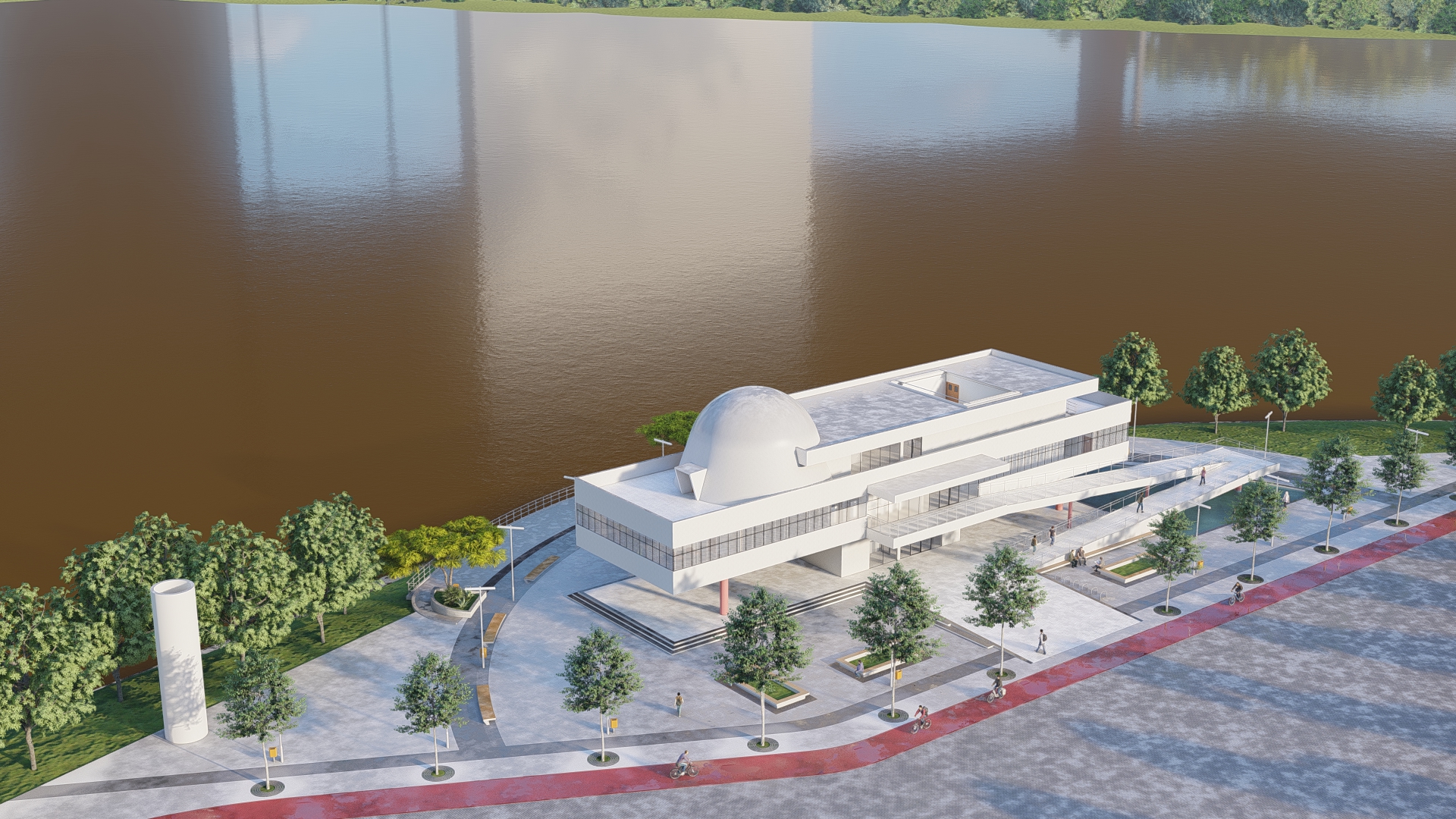
O Projeto Praça da Ciência e Planetário de Colatina, além de uma requalificação do espaço público aberto, constitui-se também com um edifício planetário para diversificar e enriquecer ainda mais esses eventos urbanos existentes no local e na sua paisagem. O projeto fica localizado no cruzamento entre a rua José Jacinto de Assis com a Avenida José Zouain, as margens do rio doce, na Esplanada em Colatina, também conhecido como praça do sol nascente. A Praça da Ciência e o planetário ficam com algumas de suas vistas para o rio e para a Foz do Rio Santa Maria. É nessa posição que ele conecta a natureza e o urbano.
A área da Praça da Ciência requalificada são de 4.587,37 m². Foi projetada como espaço de atividades comuns como caminhada, contemplação e socialização, além de atividades inclusivas, instrutivas e escolares. Se por um lado o interior do edifício se voltar a ensinar sobre o espaço, o sistema solar e o universo, suas aberturas e varandas proporcionam a experiencia de olhar tanta para o macro do céu de Colatina, como ao micro e também belo da vida urbana. Assim o edifício na praça é o mediador entre o céu e a terra. Entre as ciências da natureza, a astronomia, a matemática e a física, com as ciências humanas, a fauna, a flora, o espetáculo da vida animal, humana e urbana.
Para as atividades diurnas, a praça possibilita agora a já eminente própria permanência, porém agora apoiada com uma infraestrutura com bancos, lixeiras e sombra, além também de atividades instrutivas como o funcionamento do planetário, tanto para passeios escolares como para visitantes curiosos, com projeções celestes e aprendizado sobre o sistema solar, assim como também no observatório para os fenômenos astronômicos diurnos, como eclipses solares.
Description:
The Science Square and Planetarium Project in Colatina, in addition to requalifying the open public space, also includes a planetarium building to further diversify and enrich existing urban events in the area and its landscape. The project is located at the intersection of José Jacinto de Assis Street and José Zouain Avenue, on the banks of the Rio Doce, in Esplanada, Colatina, also known as Praça do Sol Nascente (Sunrise Square). The Science Square and the planetarium offer views of the river and the mouth of the Santa Maria River. It is in this position that it connects nature and the urban environment.
The area of the requalified Science Square is 4,587.37 m². It was designed as a space for common activities such as walking, contemplation, and socialization, as well as inclusive, instructive, and school activities. While the building’s interior focuses on teaching about space, the solar system, and the universe, its openings and balconies offer the experience of observing both the macro-level sky of Colatina and the micro-level beauty of urban life. Thus, the building in the square acts as a mediator between heaven and earth, connecting the natural sciences—astronomy, mathematics, and physics—with the human sciences—fauna, flora, and the spectacle of animal, human, and urban life.
For daytime activities, the square now allows for the already prominent use of the space, but now supported by infrastructure including benches, trash cans, and shade, as well as educational activities such as the planetarium, for both school trips and curious visitors, with celestial projections and learning about the solar system, and the observatory for daytime astronomical phenomena such as solar eclipses.
Descrição do Projeto:
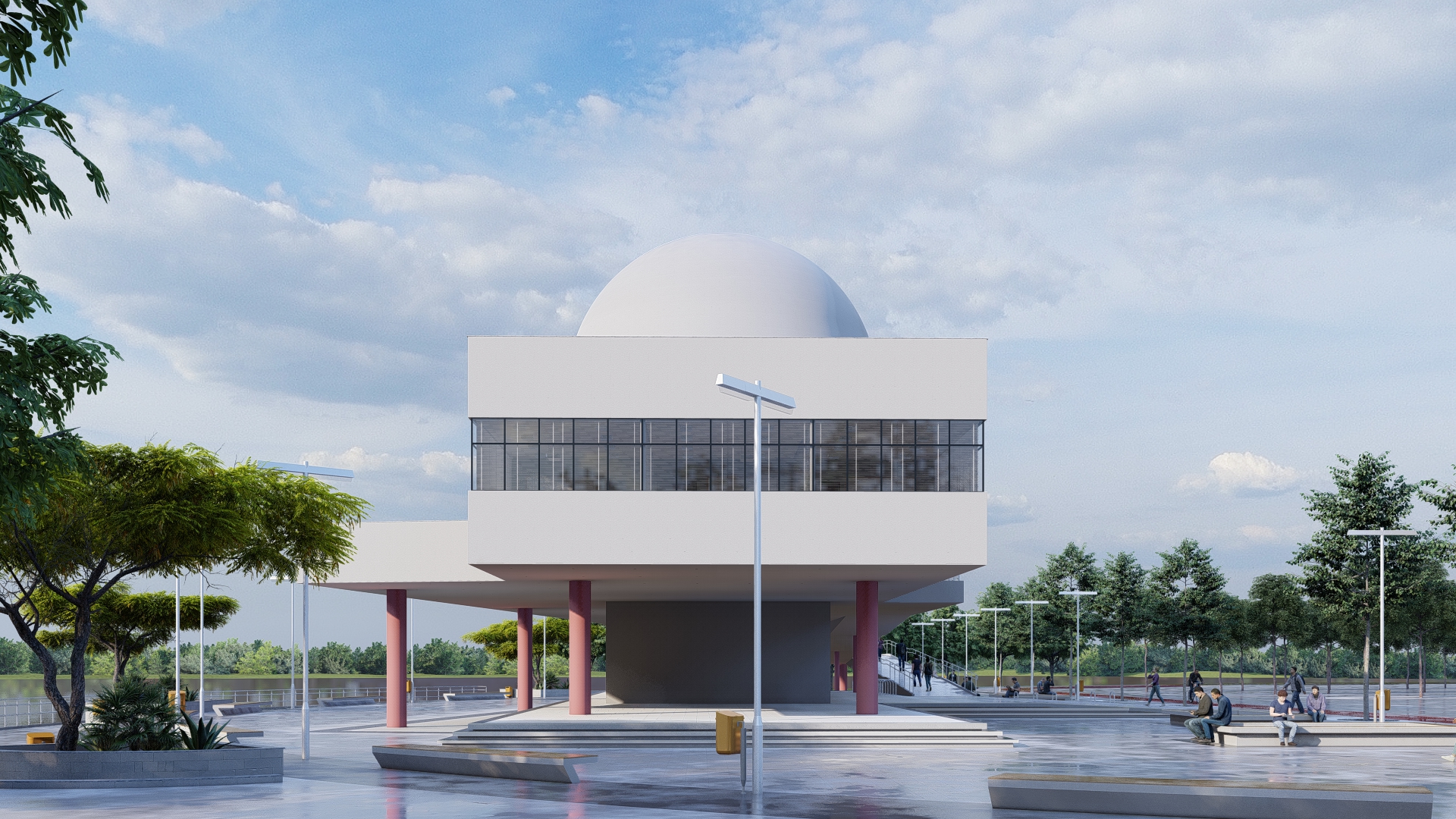
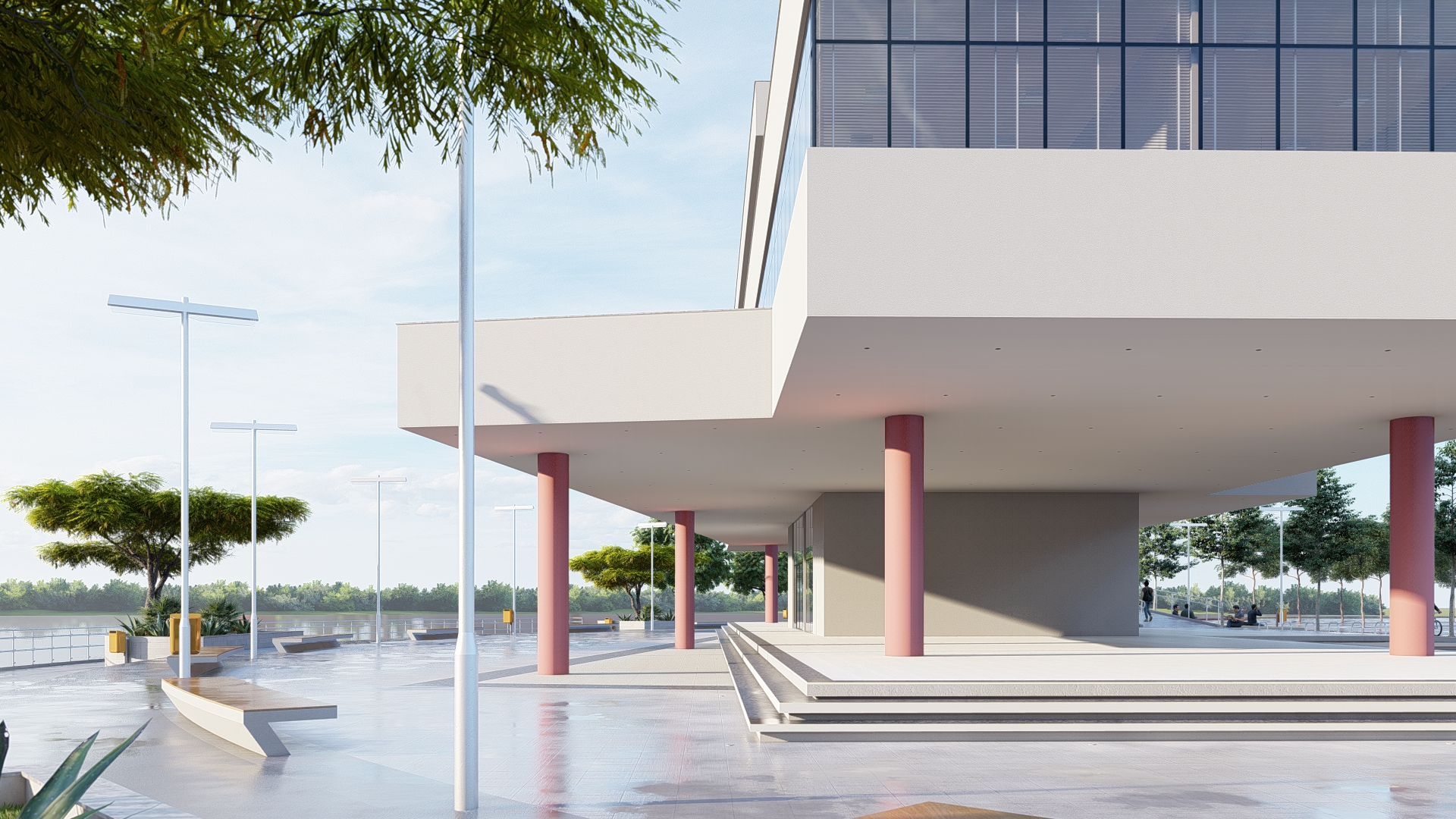
Sobre o planetário, com seu corpo elevado sobre pilotis, remetendo ao auge da arquitetura modernista no Brasil e da Corbusiana, o edifício procura expressar em sua forma a permeabilidade do entorno. Levando a atenção principal a vida a volta que se observa. Para as pessoas, as suas atividades, a cidade, a natureza, o rio, além é claro, de sua função como planetário.
A sua elevação também induz a curiosidade sobre a forma e a concepção da cúpula, e além, para o espetáculo celeste que nem sempre nos disputa a atenção na rotina. O edifício do planetário então é suspenso apenas pelo hall de entrada, rampa e pilotis, assim, evocando o seu sustento não só no material, na força dos pilares, mas também de que o que sustenta a sua presença ali é o próprio fluxo de pessoas em si.
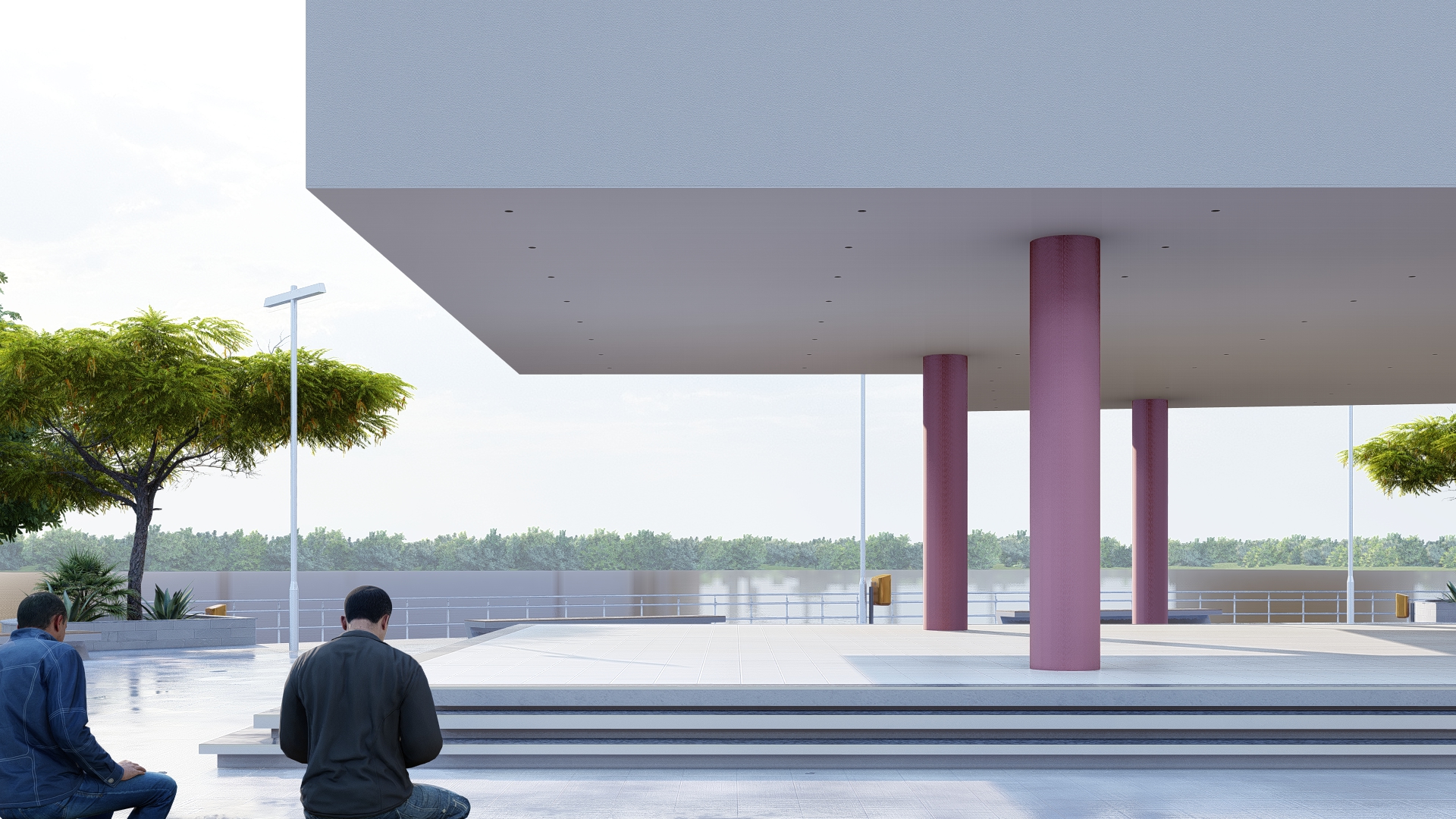
Ainda em sua base de pilotis, que é elevado do nível principal da praça por poucos degraus, o espelho d’água sobre a rampa, além de cumprir sua função como regulador de umidade para o clima de Colatina, conecta a água ao edifício, como o Rio Doce já faz em sua margem, e em quase toda a cidade.
Description:
Regarding the planetarium, with its elevated structure on pilotis, reminiscent of the height of modernist architecture in Brazil and the Corbusian style, the building seeks to express in its form the permeability of its surroundings. It draws the main attention to the life that can be observed around it. To the people, their activities, the city, nature, the river, and of course, its function as a planetarium.
Its elevation also induces curiosity about the shape and design of the dome, and beyond, about the celestial spectacle that does not always compete for our attention in our daily lives. The planetarium building is therefore suspended only by the entrance hall, ramp and pilotis, thus evoking its support not only in the material, in the strength of the pillars, but also that what sustains its presence there is the very flow of people itself.
Still on its pilotis base, elevated from the main level of the plaza by a few steps, the reflecting pool above the ramp, besides fulfilling its function as a humidity regulator for Colatina’s climate, connects the water to the building, as the Rio Doce already does on its banks, and in almost the entire city.
Descrição do Projeto:
Toda a sua base do térreo livre se permite ser uma extensão da própria paisagem. É o vazio e a força entre os átomos, o espaço entre todo o sistema solar e a nuvem Oort, é o espaço entre a plateia e o espetáculo. O pilotis é um espaço de pertencimento a praça e pertencimento ao edifício justaposto, como a onda e a matéria para a luz.
Em seu segundo pavimento está o acesso aos sanitário, algumas áreas técnicas, salas multiuso, auditório, gabinete e assistência. Nele é feita a mesclagem de atividades institucionais e educacionais. Também é no segundo pavimento que esta a varanda como mirante ao Rio Doce. Sua geometria direciona o expectador ao por do sol e possibilitando uma observação a natureza, a fauna e flora em volta do rio com telescópios terrestres.
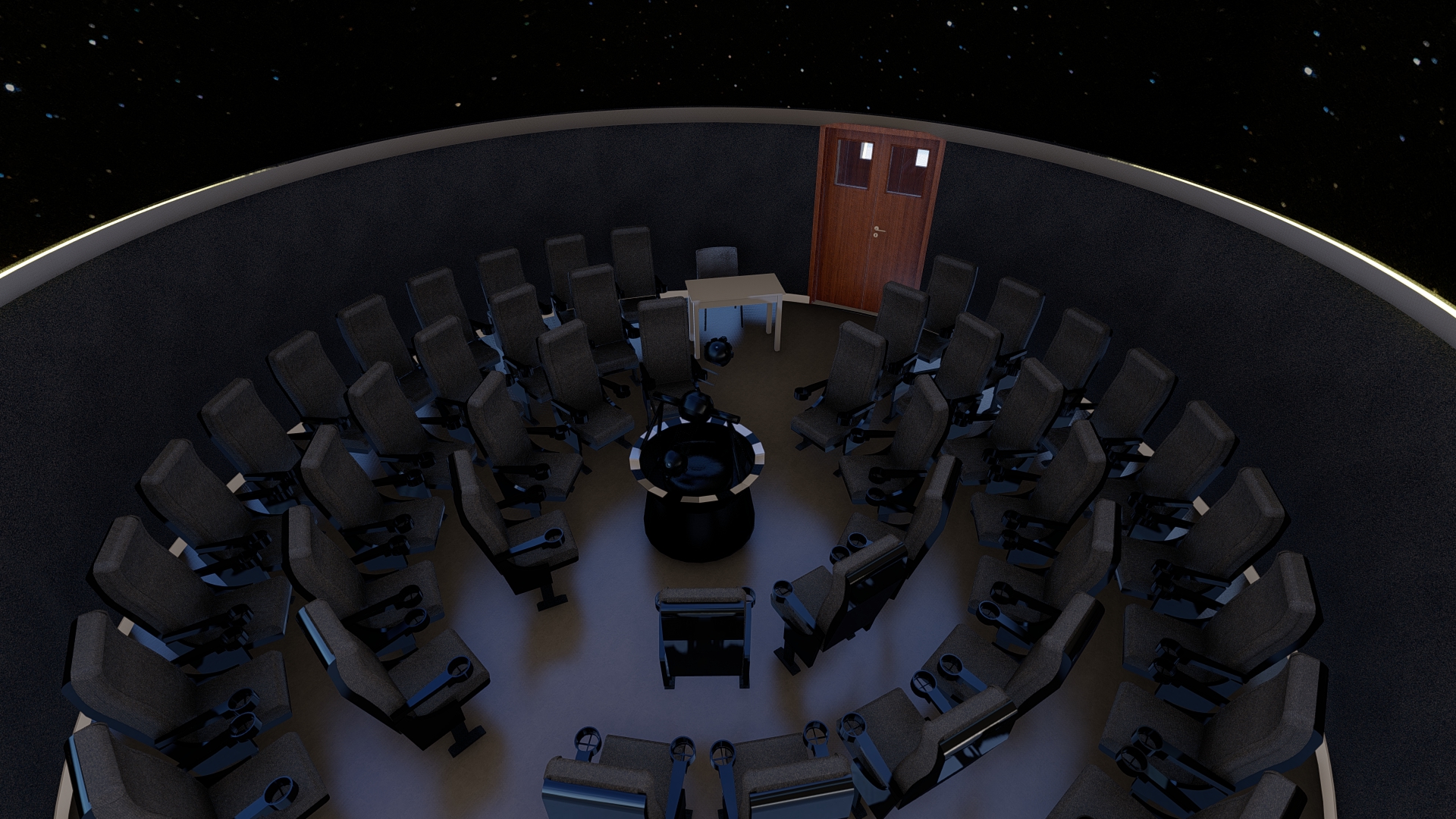
E é no terceiro pavimento que se concentra as atividades praticas com o observatório e o planetário. O planetário é o ambiente que fica dentro da cúpula. Uma sala com 50 lugares, redonda, para atividades de conhecimento celeste e contemplação. Todo o ambiente é imersivo para que a experiência não seja somente de ver o universo, mas se permitir está nele, como observador e participante.
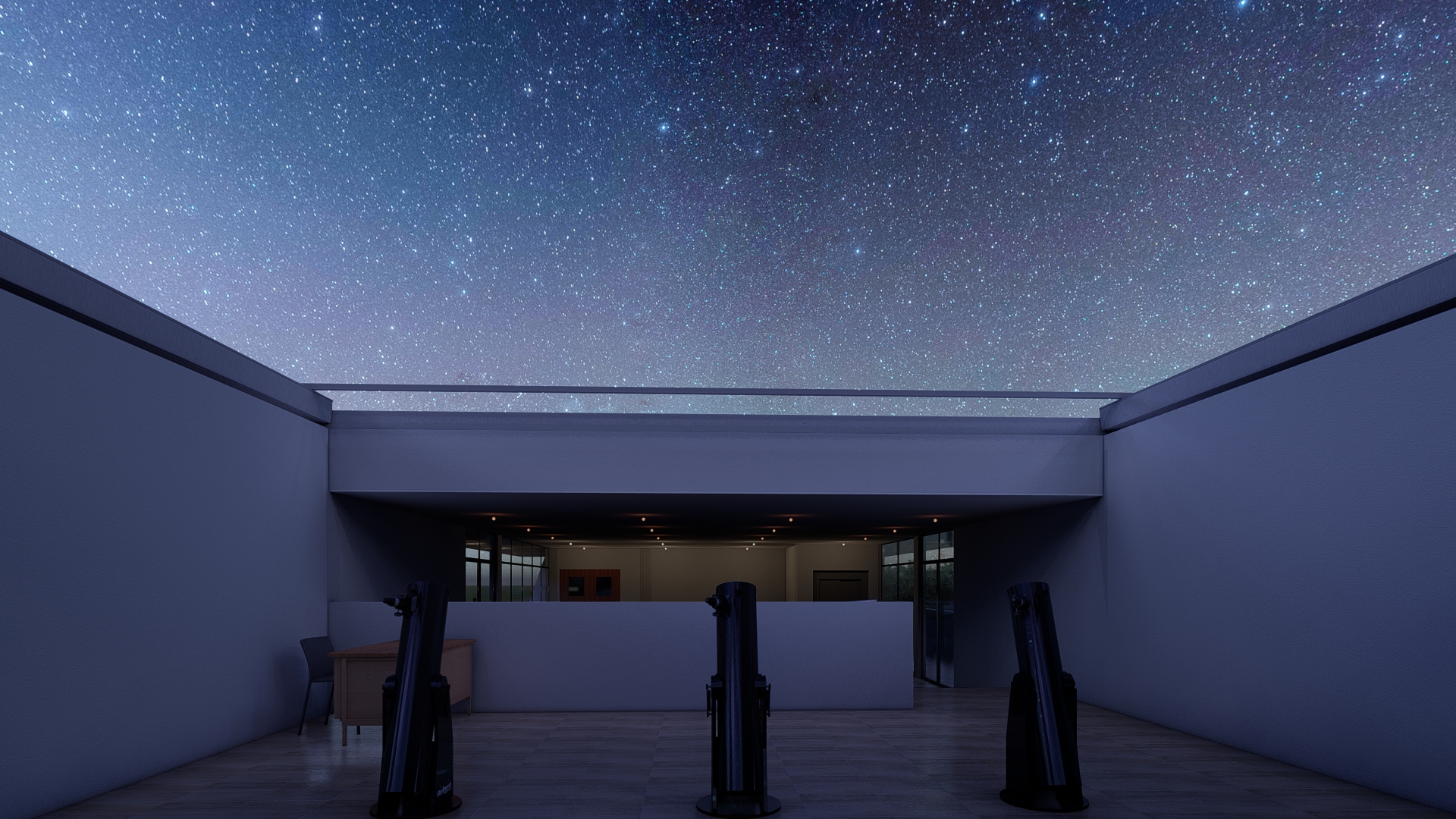
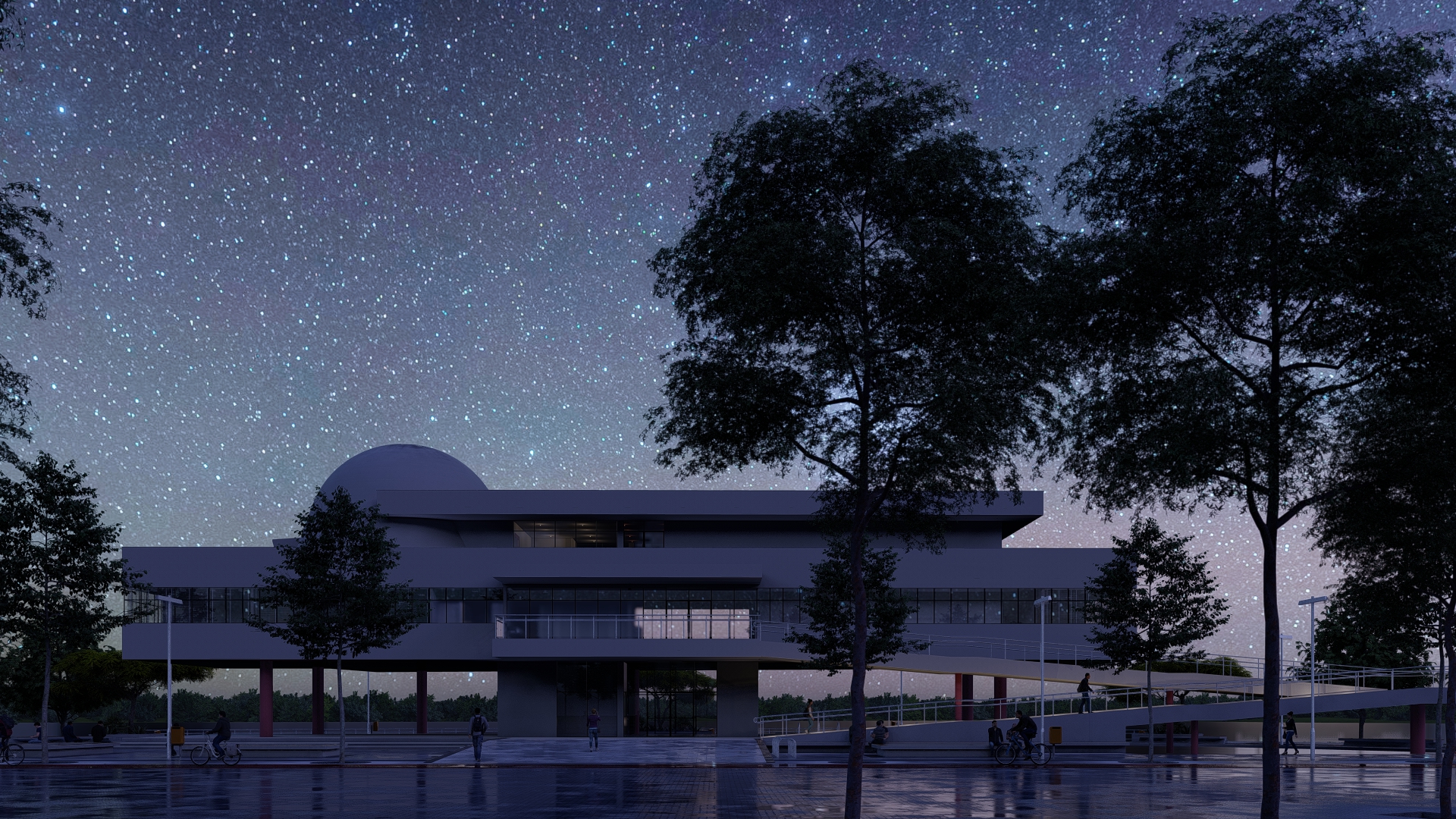
O espaço do observatório, por outro lado é aberto, porém tão imersivo quanto. Seu espaço de chegada é aberto e os telescópios ficam em um plano elevado em um teto retrátil para a observação. A iluminação da praça foi projetada para não interferir nas observações celestes e para permitir imersão. É nesse espaço que é posta a tarefa de reproduzir a sensação de observação dos astros assim como os primeiros cientistas, pioneiros da astronomia, como Copérnico, o fizeram. Que decidiram olhar não só a sua volta, mas também para cima, e assim descobrir o nosso lugar no mundo e o lugar dele no universo. Assim, com essas funções e intensões que se constitui o projeto da Praça da Ciência e Planetário de Colatina. Um espaço para celebrar a vida urbana, a natureza, a cidade e é claro, o céu noturno e os seus fenômenos.
Description:
The entire free ground floor allows itself to be an extension of the landscape. It is the void and the force between atoms, the space between the entire solar system and the Oort cloud, it is the space between the audience and the spectacle. The pilotis is a space of belonging to the plaza and belonging to the juxtaposed building, like the wave and matter to light.
On its second floor are access to restrooms, some technical areas, multipurpose rooms, auditorium, offices, and assistance areas. Institutional and educational activities are mixed there. Also on the second floor is the balcony, serving as a viewpoint overlooking the Rio Doce. Its geometry directs the viewer towards the sunset and allows for observation of nature, fauna, and flora around the river with terrestrial telescopes.
And it is on the third floor that practical activities are concentrated, with the observatory and planetarium. The planetarium is the environment located inside the dome. A round room with 50 seats, for activities of celestial knowledge and contemplation. The entire environment is immersive so that the experience is not only about seeing the universe, but about allowing oneself to be in it, as an observer and participant.
The observatory space, on the other hand, is open, but just as immersive. Its arrival area is open, and the telescopes are on an elevated platform in a retractable roof for observation. The lighting in the plaza was designed not to interfere with celestial observations and to allow immersion. It is in this space that the task is set to reproduce the sensation of observing the stars, just as the first scientists, pioneers of astronomy, like Copernicus, did. They decided to look not only around them, but also upwards, and thus discover our place in the world and its place in the universe. Thus, with these functions and intentions, the Science Plaza and Planetarium project in Colatina was created. A space to celebrate urban life, nature, the city, and of course, the night sky and its phenomena.